
Hi! This blog is no longer updated, but on this page you can find an archive of my blog posts, 2016-2022. Click here to view the blog index (a list of all posts).
For the latest news about Step Up Japanese, sign up to my newsletter.
Search this blog:

The Magic of Tadoku: “Extensive reading” in Japanese
This is the English version of an article I wrote last year which is now published in a Japanese book! 日本語多読 上 ~広がり深化する多読 (Nihongo Tadoku Jou: Hirogaru Shinka Suru Tadoku) is an introduction to Japanese extensive reading that incorporates new practices, research, and knowledge.
How I discovered Tadoku
Ever since a short trip to Japan when I was 19, I’ve been obsessed with the Japanese language. After university I moved to Japan, where I worked in Nagoya city for four years. On returning to the UK in 2014, I started teaching Japanese in Brighton at my school, Step Up Japanese…
This is the English version of an article I wrote last year which is now published in a Japanese book! 日本語多読 上 ~広がり深化する多読 (Nihongo Tadoku Jou: Hirogari Shinka Suru Tadoku) is an introduction to Japanese extensive reading that incorporates new practices, research, and knowledge.
How I discovered Tadoku
Ever since a short trip to Japan when I was 19, I’ve been obsessed with the Japanese language. After university I moved to Japan, where I worked in Nagoya city for four years. On returning to the UK in 2014, I started teaching Japanese in Brighton at my school, Step Up Japanese.
At Step Up Japanese, I teach group classes from beginner to intermediate level. Sometimes I have Japanese volunteers who come and help me out, but usually I teach all the classes myself.
My students are all adults, who typically come once a week for a 90-minute class. They’re often learning Japanese in order to travel to Japan, or as a hobby. Most students have English as their first language, and for many of them, studying Japanese is the first time they will have encountered a language that uses a different writing system to the Latin alphabet.
Learning to read and write Japanese is not easy. And since my students only have one class a week, some find it difficult to memorise hiragana and katakana (the two basic “alphabets” of the Japanese writing system). At the intermediate stage, too, I knew that my students wanted to read books and manga in Japanese, but I noticed that they often struggled to find level-appropriate reading material.
I could see that students at all levels would benefit from more reading practice, so in 2018 I decided to start a new course devoted to reading.
Up until that point, I’d mostly assigned reading practice as homework – conventional “reading comprehension” tasks. My students would often say that this kind of homework was difficult. I was using materials from the workbooks that accompany the textbooks used in class, but the exercises were often more challenging than the textbook material we’d studied in class. Students could only read these texts if they used a dictionary. And even where they could understand the exercises, they didn’t seem to find them particularly interesting.
In higher level classes, we’d tried other things such as reading yonkoma manga (four-panel comic strips) together, but students usually found this difficult too. Students enjoyed the yonkoma manga class, but I’d end up translating into English so they could understand.
I had started to wonder if there might be another way. There were so many interesting books and manga that my students would enjoy, yet here they were, reading uninspiring comprehension texts. I looked online, and that’s when I discovered the Tadoku study method.
Tadoku, sometimes called extensive reading, is the practice of learning a language by reading lots of books. In Tadoku, you read materials that are slightly below your current study level. You’re encouraged to skip words and phrases you don’t understand, and the focus is on reading for pleasure.
I thought this could be great to try out with my students, so I ordered some graded readers from NPO Tadoku.
I was a bit nervous about starting a Tadoku course. What would I, as the teacher, do while students were reading – just sit there? If students wanted to practise solo reading, they could just do that at home, couldn’t they? Who was going to sign up for a reading course where you read silently on your own...?
Seeking reassurance, I bought NPO Tadoku’s book, Nihongo kyoushi no tame no tadoku jugyou nyuumon (“An Introduction to Tadoku for Teachers of Japanese”), which had lots of useful case studies and practical advice. I was particularly encouraged to read that all you need to start a Tadoku group is a few basic components: level-appropriate books, a place to read, and a teacher (or “supporter”).
The Tadoku books arrived from Japan, and they seemed a good level for my students. But I was still apprehensive – would my adult students really want to read ‘The Three Little Pigs’ in Japanese?
I flipped through the book, and was surprised – it was so fun! The writing flowed beautifully, and the pictures were cute too. Before I knew it, I was reading the book aloud to myself.
2018: Trying out Tadoku
My Tadoku courses are short – six sessions of 55 minutes each. In each session, the first 45 minutes is devoted to solo reading, and the final 10 minutes are for “book talk”, when students chat in small groups about what they’ve read (mostly in English, but sometimes in Japanese).
All I had prepared for that first course was the set of graded readers from NPO Tadoku, and some free Tadoku books I’d printed from online. However, in the very first session I realised I was going to need more books! I actually didn’t think my students could read so fast in Japanese. Pleasantly surprised, I ordered more graded readers from Japan.
A reading revolution...?
I started learning Japanese in 2007, but it was 2012 before I read a whole book in the language.
When I started to study Japanese, I dreamed of one day being able to read Haruki Murakami’s ‘Norwegian Wood’ in the original Japanese. I did try and read manga and novels quite early on, but they were too difficult and I’d soon give up. There were so many words I didn’t know, and I’d look each word up in the dictionary, so the process was slow and a bit painful.
(Now, I love reading Japanese novels. But it frustrates me that it took so long to get to this point, and that it wasn’t always an enjoyable process…)
That summer in 2018, halfway through the Tadoku course, I went to Lisbon on holiday. I drank beer on the beach and read ‘Convenience Store Woman’ in the original Japanese.
This time, I didn’t use a dictionary at all. I just tried to read according to Tadoku principles, skipping over unfamiliar words and phrases – and it was a lot of fun. I finished the book much more quickly than I expected, and because I wasn’t using a dictionary, I was able to truly lose myself in the story.
I’d never experienced this with a Japanese book before. I realised that my concept of what it means to “read Japanese” had changed completely.
So Tadoku has been revolutionary for my students - but it had a huge impact on me too.
If only I’d known about Tadoku in 2007 – I could have read a lot of fun books in those first five years!
2019: Adding manga and picture books to the mix
The feedback from students was great, so in 2019 I held another 6-week summer course, and about half of the students were returnees who had attended the previous year.
As well as the graded readers, I added in some more easy-ish manga as well as some picture books. Children’s picture books with simple Japanese, like Tarō Gomi’s Dareka ga imasu (“Somebody’s There”) and Katsu Kiuchi’s Yasai no onaka (“Inside Vegetables”) were popular with my students, especially the beginners.
2020: Trying online Tadoku
Due to the covid-19 pandemic, in March 2020 I moved all my teaching online, and so the 2020 Tadoku course moved online too. As before, it was six sessions, with a maximum of 12 students, and it sold out quickly.
(Also, because this course was online for the first time and all the materials we used were free online resources, I offered this course at half price.)
At the start of each Zoom session, I’d show students some new books and resources, and then I’d put them each into their own individual breakout rooms for the reading session. I’d visit each student in turn, checking they were okay, talking to them about what they were reading, and making suggestions where appropriate.
As before, the last 10 minutes was devoted to “book talk”, where students talk in pairs or threes. This year, I also suggested that students keep a reading log of what they’d read and what they thought of it.
My impression is that more students listened to the audio files that accompany the graded readers, probably because these materials were easier to access when attending an online course. I also showed them some YouTube videos of kids’ books being read aloud, which proved popular too.
Students’ responses to Tadoku
Tadoku is probably the most popular course I run at Step Up Japanese.
Sara has been a student of mine for several years. I interviewed her about Tadoku in Summer 2019, when she was at Upper Beginner level, and reading Level 0 and 1 Tadoku books. Here’s what she had to say:
“It’s just reading, really, in my case the simplest books there are, but they’re actually really cute little stories. And it’s quite nice to come back from work and just sit there, and you’re getting your practice in but it doesn't feel quite so much like practice, because you’re focusing on the story.”
We asked Sara what she’d read that day, and to tell us what happens in the story:
“The country mouse went to the town mouse’s house, and found out how scary everything was, because there’s people and cats, and all the rest of it. It took me to nearly the end of the book and suddenly I realised I did actually recognise the kanji for ‘town’, and then I figured out what the two words in front of ‘mouse’ were.”
From this comment, we can see that Sara was able to follow the story, a Japanese translation of ‘The Town Mouse and the Country Mouse’, well. She skipped over words and phrases she didn’t understand, and then afterwards, she was able to realise what the word machi ( “town”) meant.
David has attended Tadoku courses at Step Up Japanese three summers in a row, and when I interviewed him in 2019 he was reading at around Level 2:
“I enjoy Tadoku, as it gives me the opportunity to read Japanese, without the pressure of trying to understand every single word.”
Of course, not all the feedback is positive all the time! Some students feel that it’s simply impossible to read without using a dictionary, and some aren’t interested in reading children’s books.
Because we are in the UK, some students don’t come into any contact with any Japanese outside of our lessons. For some of these beginner students, who are still learning hiragana and katakana, even at Level 0 there are some Tadoku books which are too difficult. In the classroom, I’d be able to recommend kids’ picture books to those students, or suggest easier books within the Level 0 framework. Online, I guided them towards YouTube videos of kids’ books being read aloud.
After our first session of the 2020 Online Tadoku course, I got this email from another student. He’d read the book Tamago (“Eggs”) once in the Tadoku session, and then read it again after the session because he enjoyed it so much:
Translation:
“Tamago (‘Eggs’)
I first read Tamago in Tadoku class. Today I read it again. I like books about food, so Tamago was fun. I learned some new words.”
This student usually emails me in English, and this is the first reasonably long email he’s sent me in Japanese.
There are some grammar mistakes in his Japanese message, but it’s clear exactly what he wants to say. But why, after the first Tadoku session, did he think to email me in Japanese?
He read a fun book, enjoyed it, and felt confident to write an email in Japanese. That’s amazing, isn’t it? And some of this confidence must have come from Tadoku.
What’s next?
Building on the 2020 Online Tadoku course, I’d love to run Tadoku courses not only as summer courses, but also as short courses at other times of the year too.
I’ve run a “Learn Japanese with Netflix” course before, where students watched Japanese drama and reality TV shows together, but we haven’t tried “solo watching” yet. I’d really like to try out a Ta-kan (“watch-a-lot”) course with my students too! Maybe next year...
- Fran Wrigley, Step Up Japanese, Brighton, UK
- More about Step Up Japanese: www.stepupjapanese.com
- Watch a video report (in English/Japanese with subtitles) about Tadoku at Step Up Japanese: https://www.youtube.com/watch?v=Abn6vzQNmT0
- Follow Fran on:
Twitter twitter.com/stepupjapanese
Instagram instagram.com/stepupjapanese
Facebook facebook.com/stepupjapanese

One Year of (Sort of) Learning French
Like many people in the UK, I studied French in school. I liked French. I thought it was really fun to speak another language, to talk with people, and to try and listen to what was going on in a new country. (Still do!)
When I was 14 we went on a school exchange to the city of Reims, in northeastern France. I was paired with a boy, which I’m sure some 14-year-olds would find very exciting but which I found unbearably awkward. He was very sweet and we completely ignored each other.
That was nearly 20 years ago, and I didn’t learn or use any more French until, at some point in lockdown, I decided on a whim to take some one-to-one lessons with online teachers. Here are some things I learned about French, about language learning, and about myself.

Like many people in the UK, I studied French in school. I liked French. I thought it was really fun to speak another language, to talk with people, and to try and listen to what was going on in a new country. (Still do!)
When I was 14 we went on a school exchange to the city of Reims, in northeastern France. I was paired with a boy, which I’m sure some 14-year-olds would find very exciting but which I found unbearably awkward. He was very sweet and we completely ignored each other.
I also realised immediately that I didn’t need to speak any French with him, because he spoke fluent English, having lived in the UK until the age of 8. I did, however, get to speak some French with his mum.
Here are some examples of my French ability at the age of 14, to give you an idea.
We visited Riems cathedral and, in the car on the way home, I said “ç'était grand et belle” (it was big and beautiful). My exchange partner’s mum heard and understood me, which was very exciting.
I also remember that her other son called the house, and I asked “Pierre téléphone souvent?” (“does Pierre phone you often?”) and the mum laughed and said no, not really.
So, I guess we could say that my French was basic but enthusiastic. Probably, “Pierre téléphone souvent?” is not a grammatically correct sentence, but I didn’t care then and I don’t care now. She understood me! She laughed!
That was nearly 20 years ago, and I didn’t learn any more French until, at some point in lockdown, I decided on a whim to take some one-to-one lessons with online teachers. Here are some things I learned about French, about language learning, and about myself.
Holy merde, some textbooks are boring
I bought some French textbooks, but I didn’t use them very much because I found them really deathly boring. I also found that French grammar didn’t stick in my head from trying to do textbook exercises. So, I mostly ignored them and just tried to read other things in French. This was surprising to me, because as a student I quite like Japanese textbooks.
…but other books are fun!
There are lots of easy short stories out there:
*Links with an asterisk are affiliate links, which means I may earn a small commission when you click through and buy the book. Thanks for your support!
If you’re interested in Japanese short stories, there are lots of similar books of short stories available. Or you could read Tadoku books!
Routine is my friend (it might be yours too?)
During various national lockdowns, I had a regular Sunday morning zoom call with my brother where we’d sit and “do productive things” together. I used this time to read French books and watch French TV. It was a standing weekly appointment, so I didn’t have to plan it in. It was just what I did on Sunday mornings.
Making regular time to practise is one of the best things you can do to learn a language.
TV, TV, TV
I watched loads of French TV last year. If you have a basic knowledge of a language, you can probably watch TV in your target language, with the subtitles in that target language too. Netflix is great for this, because there are so many languages available! I watched all of Call My Agent (Dix pour cent) and Lupin in French, with French subtitles. I didn’t understand everything, but I got the gist of what was going on.
I know what you might be thinking. “But reading French is easier than reading Japanese!” You’re not wrong. If watching Japanese TV with Japanese subtitles is too hard at the moment, you could watch with subtitles in your native language.
I also watched a lot of Spiral (Engrenages), although that’s on BBC so it’s hard-subbed (i.e. you can’t turn the subtitles off, or change the language) with English subtitles. Spiral is a police and legal procedural, so I think it would be too hard for me to watch with French subtitles anyway.
Importantly, these are all TV shows I would happily watch, even if I wasn’t trying to get listening practice. Find something you enjoy, and keep at it.
The power of input
What do reading French books and watching French TV have in common? They’re input activities.
Listening and reading are input activities - you take in the language and (hopefully) learn some of it.
Speaking and writing, on the other hand, are output activities - you produce (i.e. use) the language you have.
Although it’s important to practise speaking, without large amounts of input, you can’t produce good-quality output.
Try different types of lessons and teachers
I had lessons on italki with various different teachers. Most were very good. Some weren’t such a good fit.
I’m a language teacher, and I have quite specific expectations from teachers I work with. I don’t like it when they’re late, or don’t come at all with no explanation. I don’t like it when they set me homework and then don’t check it. Maybe you wouldn’t mind that, but I found this annoying and unprofessional, and didn’t book with those teachers again.
The most successful lessons were the ones where I felt relaxed. Sometimes we’d chat for 25 minutes, then do a bit of hasty grammar for 5 minutes. I’m on board with that.
Progress will happen, but it takes time
At first, I couldn’t use any past tenses in French at all. I didn’t really care, but my teachers seemed to.
It can be tempting to think that if you go away and practise something, you’ll have mastered it by the next lesson, but ideas take time to “bed in”.
Overall, I felt fairly relaxed about the whole thing. If I keep plugging away at French, and practising, I’ll get better. If I only practise a bit, then progress will be slow. That’s ok too.
Speak and be heard
As a teacher, I’m so pleased when my students want to share their lives with me: to tell me about their day, their dreams, their fears, how their cat always eats the butter off their breakfast in the morning.
I really enjoyed re-learning some French, and it made me think about my teaching a lot - how it feels to be corrected; to not understand an explanation; to falteringly, finally, speak and be heard.
Isn’t that what we all want - to be heard and understood?
How to Use Anki to Not Forget Vocabulary
Lots of you probably use flashcards already. Why not use really, really clever ones?
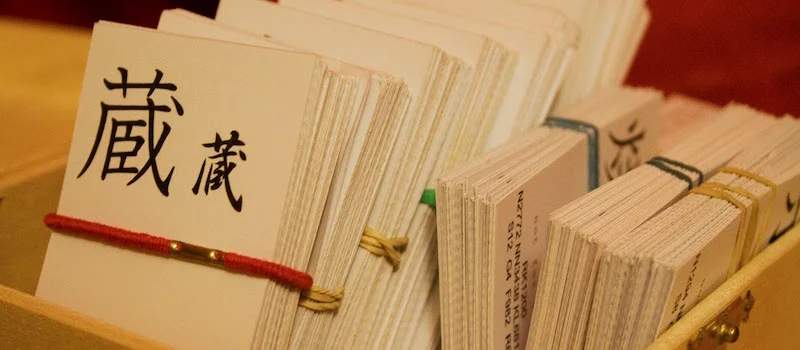
Imagine you're studying Japanese vocabulary with a set of flashcards. You go through the cards one by one, putting them into a "pass" pile if you remembered them, and a "fail" pile if you didn't.
When you finish, you work through the "fail" pile again. You get about half of them right.
The next day, you go through all the cards again. It takes ages, and it's boring - you did all these yesterday…

You want to use flashcards. Why not use really, really clever ones?
Imagine you're studying Japanese vocabulary with a set of paper flashcards. You go through the cards one by one, putting them into a "pass" pile if you remembered them, and a "fail" pile if you didn't.
When you finish, you work through the "fail" pile again. You get about half of them right.
The next day, you go through all the cards again. It takes ages, and it's boring - you did all these yesterday.
Or maybe you start with the "fail" pile. But this card pile is smaller, so when the cards come up, you just remember the fact that you failed them yesterday!
This approach is okay, if you’re enjoying yourself. (Anything is okay, as long as you're having fun. This is my basic approach to language learning).
But you can make flashcards much more efficient - and stop wasting your time - with a spaced repetition system like Anki.
The power of active recall
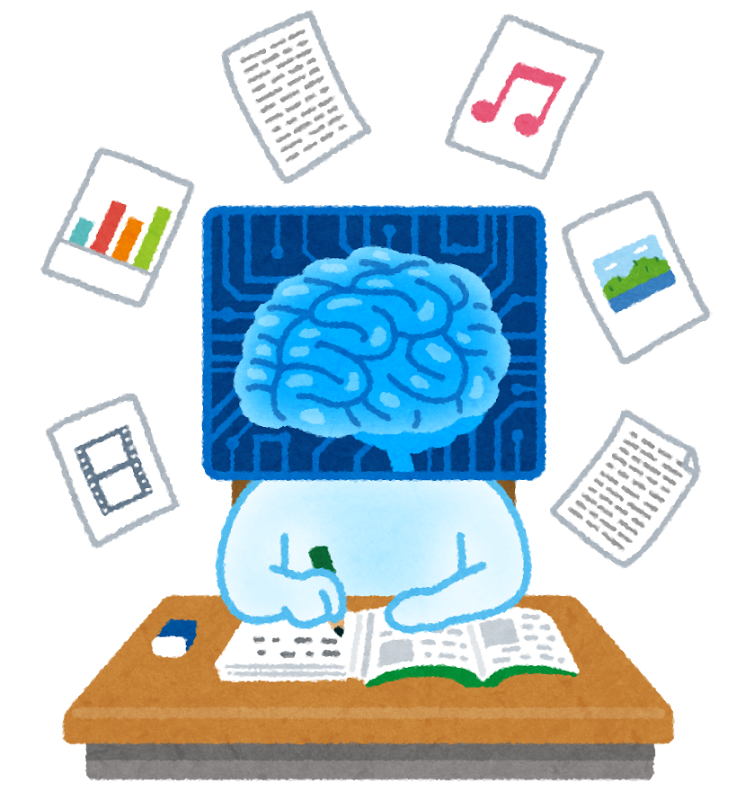
When you use flashcards to test yourself, you're engaging in active recall - you're pushing your brain to remember something. This is the most effective way to commit things to memory.
You know that feeling when you're struggling to remember a word, and then finally get to it? That's active recall.
At that moment, you've just cemented the correct meaning of the word in your mind. And you'll remember it much quicker next time.
What is Anki?
Anki is a spaced repetition system (SRS) - a system for remembering things. It's free for PC / Mac, and Android. The iPhone app is not free (it’s £23.99), so I'd try it out on a computer first and see if you like it.
(Then again, it might be the best £23.99 you ever spend...)
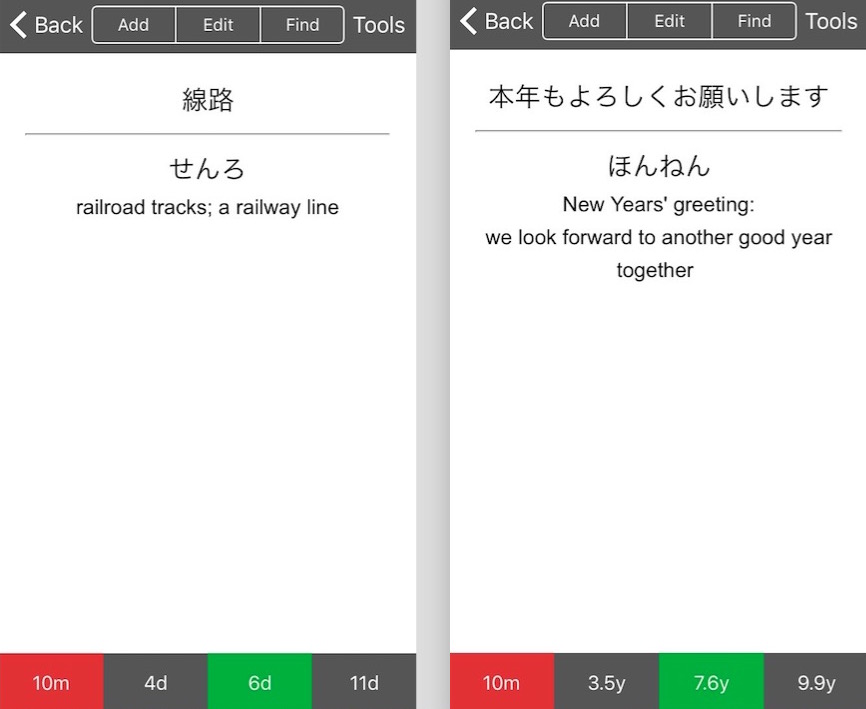
Anki shows you digital flashcards and tests you. It then spaces out the cards into the future, depending on how difficult you found them.
If you don't remember a word, Anki shows you it again in 10 minutes.
If you said it's easy, it might show you in three days. If in three days it's still easy, it waits seven days before it tests you on that word again.
If you keep getting it right, the interval increases exponentially, until Anki knows it'll be years before you forget that word. When you get it wrong, Anki knows you need to practice that word again soon.
So Anki sorts the “piles” of flashcards for you, testing you on material just as it thinks you're about to forget it.
I told you it was clever.
What to study?
Anki has shared decks that you can download - sets of flashcards made by other users.
If you're studying for the JLPT, there are loads of decks for that. And whatever Japanese textbook you're using, there'll be an Anki deck for it.
You probably don’t want to memorise every word in your textbook - maybe you don't think you need the word for "municipal hospital", or you want to focus on certain areas. Just delete the cards you don't need.
Or you can make your own decks by adding your own material. That's probably the best approach.
Maybe you want to memorise verb conjugations (masu form to -te form; -nai form, etc). Or maybe you just can't remember the difference between ウ and ワ. Stick it in your Anki deck, and forget about forgetting things.
What not to study
A word of caution - don't try and memorise things you don't understand yet.
For example, let's say in your textbook there's a chart giving the -nai forms of common verbs. You could put those in your anki deck and memorise them, I guess.
But it's no use if you don't know what the -nai form is and how it's used. Learn what it is - practice it, speak it, own it - and use spaced repetition to help you remember.
A useful companion
I tried to use Anki to re-learn some French last year (my high school French class was a long time ago).
I downloaded a beginner French deck, and I'd sit on the train testing myself on vocabulary. It helped a bit, but I didn't magically learn to speak French! That's basically because I never tried to produce any French in that time. I didn't speak with anyone or write down anything in French...
To master a language, you need to speak out loud, and listen a lot.Spaced repetition is a brilliant tool and a companion to learning. But it's not everything... you need to actually practice too.
I'd love to know how you're getting on with Anki. Do you love it or hate it? Tweet me a screenshot of your cards, or let me know in the comments.
First published May 08, 2017
Updated October 09, 2018














Like many people in the UK, I studied French in school. I liked French. I thought it was really fun to speak another language, to talk with people, and to try and listen to what was going on in a new country. (Still do!)
When I was 14 we went on a school exchange to the city of Reims, in northeastern France. I was paired with a boy, which I’m sure some 14-year-olds would find very exciting but which I found unbearably awkward. He was very sweet and we completely ignored each other.
That was nearly 20 years ago, and I didn’t learn or use any more French until, at some point in lockdown, I decided on a whim to take some one-to-one lessons with online teachers. Here are some things I learned about French, about language learning, and about myself.