
Hi! This blog is no longer updated, but on this page you can find an archive of my blog posts, 2016-2022. Click here to view the blog index (a list of all posts).
For the latest news about Step Up Japanese, sign up to my newsletter.
Search this blog:

One Year of (Sort of) Learning French
Like many people in the UK, I studied French in school. I liked French. I thought it was really fun to speak another language, to talk with people, and to try and listen to what was going on in a new country. (Still do!)
When I was 14 we went on a school exchange to the city of Reims, in northeastern France. I was paired with a boy, which I’m sure some 14-year-olds would find very exciting but which I found unbearably awkward. He was very sweet and we completely ignored each other.
That was nearly 20 years ago, and I didn’t learn or use any more French until, at some point in lockdown, I decided on a whim to take some one-to-one lessons with online teachers. Here are some things I learned about French, about language learning, and about myself.
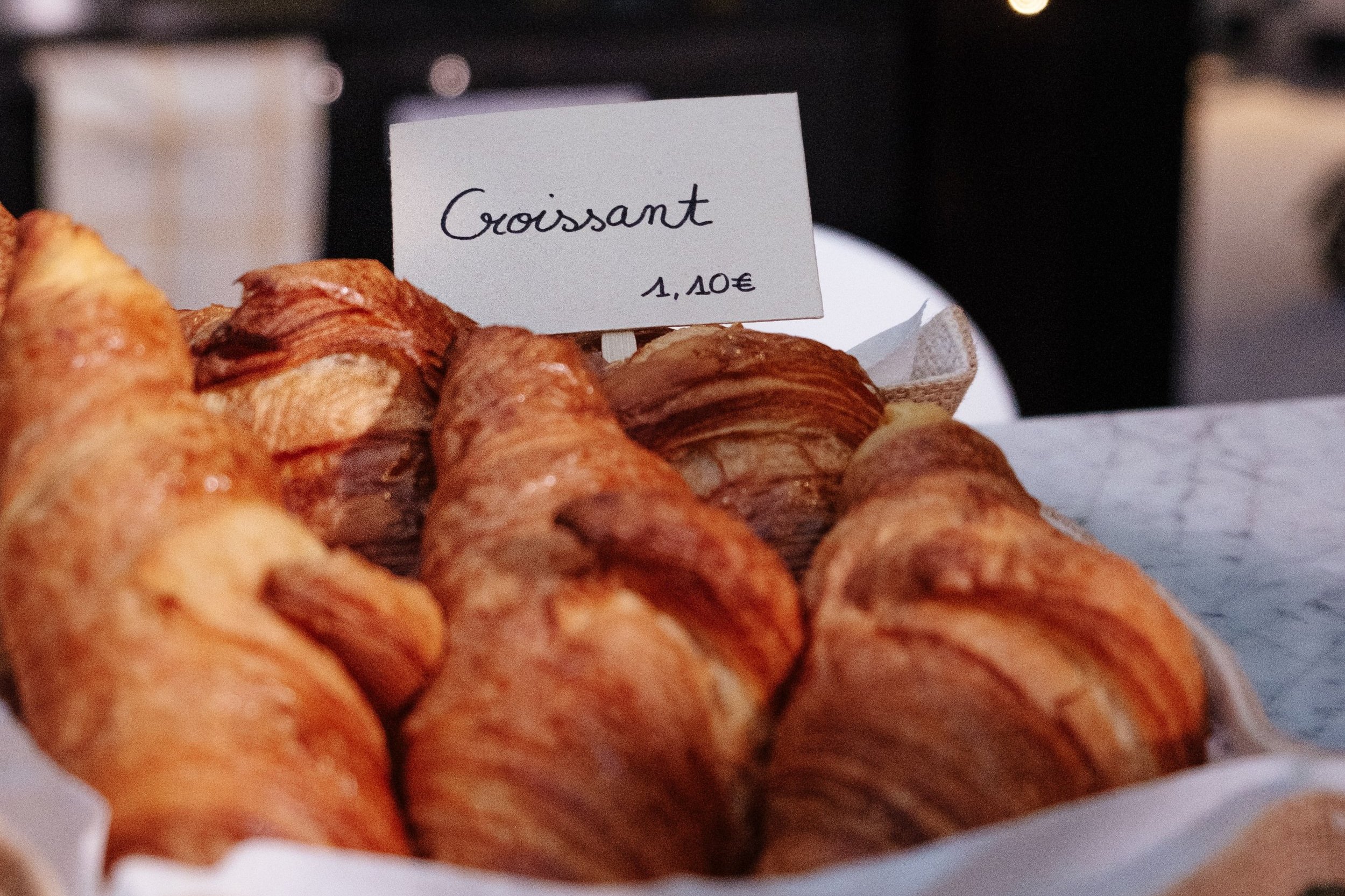
Like many people in the UK, I studied French in school. I liked French. I thought it was really fun to speak another language, to talk with people, and to try and listen to what was going on in a new country. (Still do!)
When I was 14 we went on a school exchange to the city of Reims, in northeastern France. I was paired with a boy, which I’m sure some 14-year-olds would find very exciting but which I found unbearably awkward. He was very sweet and we completely ignored each other.
I also realised immediately that I didn’t need to speak any French with him, because he spoke fluent English, having lived in the UK until the age of 8. I did, however, get to speak some French with his mum.
Here are some examples of my French ability at the age of 14, to give you an idea.
We visited Riems cathedral and, in the car on the way home, I said “ç'était grand et belle” (it was big and beautiful). My exchange partner’s mum heard and understood me, which was very exciting.
I also remember that her other son called the house, and I asked “Pierre téléphone souvent?” (“does Pierre phone you often?”) and the mum laughed and said no, not really.
So, I guess we could say that my French was basic but enthusiastic. Probably, “Pierre téléphone souvent?” is not a grammatically correct sentence, but I didn’t care then and I don’t care now. She understood me! She laughed!
That was nearly 20 years ago, and I didn’t learn any more French until, at some point in lockdown, I decided on a whim to take some one-to-one lessons with online teachers. Here are some things I learned about French, about language learning, and about myself.
Holy merde, some textbooks are boring
I bought some French textbooks, but I didn’t use them very much because I found them really deathly boring. I also found that French grammar didn’t stick in my head from trying to do textbook exercises. So, I mostly ignored them and just tried to read other things in French. This was surprising to me, because as a student I quite like Japanese textbooks.
…but other books are fun!
There are lots of easy short stories out there:
*Links with an asterisk are affiliate links, which means I may earn a small commission when you click through and buy the book. Thanks for your support!
If you’re interested in Japanese short stories, there are lots of similar books of short stories available. Or you could read Tadoku books!
Routine is my friend (it might be yours too?)
During various national lockdowns, I had a regular Sunday morning zoom call with my brother where we’d sit and “do productive things” together. I used this time to read French books and watch French TV. It was a standing weekly appointment, so I didn’t have to plan it in. It was just what I did on Sunday mornings.
Making regular time to practise is one of the best things you can do to learn a language.
TV, TV, TV
I watched loads of French TV last year. If you have a basic knowledge of a language, you can probably watch TV in your target language, with the subtitles in that target language too. Netflix is great for this, because there are so many languages available! I watched all of Call My Agent (Dix pour cent) and Lupin in French, with French subtitles. I didn’t understand everything, but I got the gist of what was going on.
I know what you might be thinking. “But reading French is easier than reading Japanese!” You’re not wrong. If watching Japanese TV with Japanese subtitles is too hard at the moment, you could watch with subtitles in your native language.
I also watched a lot of Spiral (Engrenages), although that’s on BBC so it’s hard-subbed (i.e. you can’t turn the subtitles off, or change the language) with English subtitles. Spiral is a police and legal procedural, so I think it would be too hard for me to watch with French subtitles anyway.
Importantly, these are all TV shows I would happily watch, even if I wasn’t trying to get listening practice. Find something you enjoy, and keep at it.
The power of input
What do reading French books and watching French TV have in common? They’re input activities.
Listening and reading are input activities - you take in the language and (hopefully) learn some of it.
Speaking and writing, on the other hand, are output activities - you produce (i.e. use) the language you have.
Although it’s important to practise speaking, without large amounts of input, you can’t produce good-quality output.
Try different types of lessons and teachers
I had lessons on italki with various different teachers. Most were very good. Some weren’t such a good fit.
I’m a language teacher, and I have quite specific expectations from teachers I work with. I don’t like it when they’re late, or don’t come at all with no explanation. I don’t like it when they set me homework and then don’t check it. Maybe you wouldn’t mind that, but I found this annoying and unprofessional, and didn’t book with those teachers again.
The most successful lessons were the ones where I felt relaxed. Sometimes we’d chat for 25 minutes, then do a bit of hasty grammar for 5 minutes. I’m on board with that.
Progress will happen, but it takes time
At first, I couldn’t use any past tenses in French at all. I didn’t really care, but my teachers seemed to.
It can be tempting to think that if you go away and practise something, you’ll have mastered it by the next lesson, but ideas take time to “bed in”.
Overall, I felt fairly relaxed about the whole thing. If I keep plugging away at French, and practising, I’ll get better. If I only practise a bit, then progress will be slow. That’s ok too.
Speak and be heard
As a teacher, I’m so pleased when my students want to share their lives with me: to tell me about their day, their dreams, their fears, how their cat always eats the butter off their breakfast in the morning.
I really enjoyed re-learning some French, and it made me think about my teaching a lot - how it feels to be corrected; to not understand an explanation; to falteringly, finally, speak and be heard.
Isn’t that what we all want - to be heard and understood?

Dr. Anki or, How I Learned to Stop Worrying and Embrace Multiple Decks (GUEST POST!)
A special guest post from Step Up Japanese student Phil Kinchington!
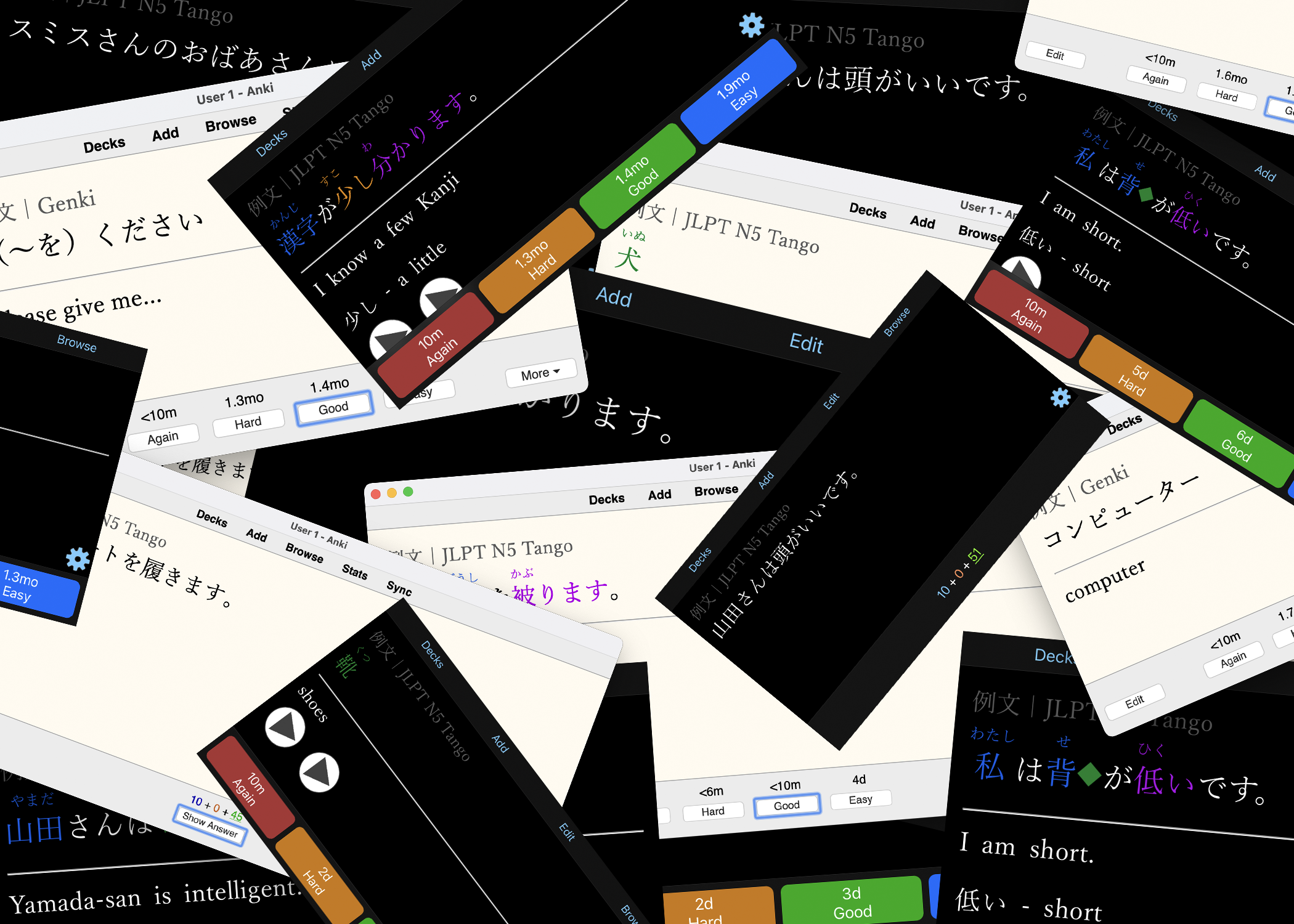
Anki is a flashcard app that uses a Spaced Repetition System (SRS) to help you learn and memorise information by creating strong, long-lasting memories. It does this by aiming to present you with a flashcard exactly at the point you were about to forget it.
You should be able to recall the information, but at a slight stretch. If you remember the card correctly, it will increase the length of time before it shows it to you again. If you can’t remember (or remember incorrectly) it will show it to you again sooner. It was originally developed for language learning (being named after the Japanese word for ‘memorisation’) but has since been applied to many subjects, including medical studies…
A special guest post from Step Up Japanese student Phil Kinchington!
Anki is a flashcard app that uses a Spaced Repetition System (SRS) to help you learn and memorise information by creating strong, long-lasting memories. It does this by aiming to present you with a flashcard exactly at the point you were about to forget it.
You should be able to recall the information, but at a slight stretch. If you remember the card correctly, it will increase the length of time before it shows it to you again. If you can’t remember (or remember incorrectly) it will show it to you again sooner. It was originally developed for language learning (being named after the Japanese word for ‘memorisation’) but has since been applied to many subjects, including medical studies.
While I saw Anki mentioned and recommended everywhere, I could never figure out a way to use it that really worked for me. Some people recommended that you should download a pre-made deck to match the textbook you are using (there is a huge library of decks submitted by users accessible from within Anki.) But I felt this would mean that it would start automatically adding vocabulary past the point I’d got to in the book.
(Note from Fran - you can “suspend” all the cards and manually “unsuspend” them as you work your way through a textbook, although I appreciate this is a bit fiddly!)
A lot of people recommended that you should use a single deck, and dump everything you came across into it, which seems a bit too messy for my liking. Also, I'd then be constantly having the dilemma of "do I put this in, or is it not worth it, or how can I add this in a meaningful way, that I'd understand why it was there when I came back to it?"
A big part of the problem is how open and flexible the system is. Anki doesn’t guide you or force you to work with it in a specific way, and the design of the cards is almost infinitely configurable. Of course, this is also the reason it has been possible to adapt it for so many different subjects.
I’d pretty much given up trying, and then I discovered the Alivia’s Japanese Nook YouTube channel. On that channel Alivia has a video specifically about using Anki to study Japanese that has been very useful to me. It's a bit long, as it covers every detail of how to use it, and exactly how she has all the settings configured. But if you’ve never used Anki at all, it’s a very good guide to getting it set up and starting to use it.
As a result of watching this video, I have developed a way of using Anki that seems to be working for me. I have multiple decks. Firstly I have a 'Genki' deck, which I'm manually populating with the vocabulary from the vocab pages in each chapter. This way, I can control how far ahead it goes. The other deck is the one recommended in this video called 'JLPT Tango N5 MIA Japanese' (it is a deck that has been built to go along with the JLPT Tango N5 study book*.) Over a month later and it still seems to be working for me, which is better than I've ever managed with it - every time I've tried, I've bounced off pretty hard and pretty fast.
The JLPT deck mostly uses the vocabulary in phrases, which is more useful for remembering and understanding the usage (although, I've just been through a batch where it felt it was essential to go through every month of the year, and also a whole load of one person, two people, three people, six people, etc.)
It also uses kanji from the start, and you don't get the furigana until you click through to the answer, which could be a bit harsh depending on how many kanji you‘ve already been exposed to. But so far they've all been pretty common kanji that I was already comfortable with. Each card also has full voice recordings that automatically play when you click to show the answer. Sometimes several versions with different voices.
So now my method is: look at the card, read the phrase aloud, then say aloud "that means" followed by saying my translation aloud. When I click through to the answer, depending on whether I've got it right or not I'll click either 'Good' or ‘Again’. I don't use the ‘Easy’ or 'Hard' options at all. As far as I'm concerned it was either Good/Satisfactory or Again/Wrong.
I give myself a bit more leeway on the translation of, for example, words like 'international/foreign student' or 'nice/pleased to meet you, how do you do, etc.' But when it comes to the Japanese, I try to be pretty hard on myself regarding kanji recognition, pronunciation, etc. Better to practice something a little more than you needed to, rather than less than you required.
Now that I’ve found that there’s no need to worry about getting overwhelmed by having multiple decks, I’m thinking of adding more. First candidate is all of the sentences from the first book or two in the Unko Sensei series. This will have the advantage that it will force me to develop my own English translations, adding an extra layer of study.
How do you study Japanese with Anki? How are your decks set up? Let us know in the comments!
Links with an asterisk* are affiliate links, which means I (Fran) may earn a small commission, at no extra cost to you, when you click through and buy the book. Thanks for your support!
Click here for more guest posts from Step Up Japanese students!

Amazing Japanese Calligraphers on Instagram (Part 3) - Isawo Murayama
Hello and welcome to the third instalment of "Amazing Japanese Calligraphers on Instagram", where I introduce amazing artists making Japanese calligraphy - and sharing it online.
Isawo Murayama is a busy mum-of-four who makes time to create new pieces daily.
Her work feels a bit like a diary - together with her descriptive Instagram captions, her calligraphy offers up a little slice of her day-to-day life.
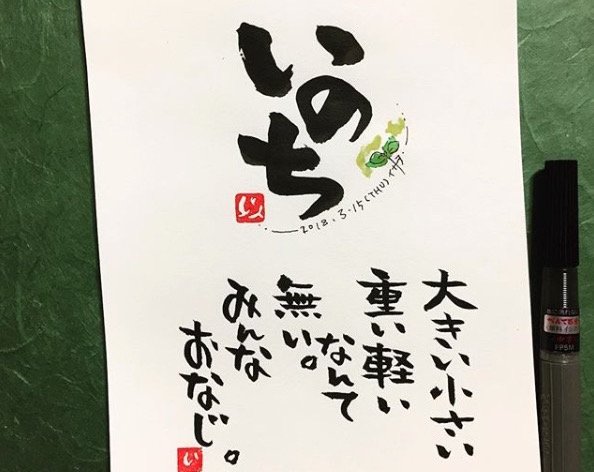
Traditional Japanese calligraphy uses a brush which is dipped into ink, but Murayama uses a 筆ペン (fude-pen) or "brush pen".
Hello and welcome to the third instalment of "Amazing Japanese Calligraphers on Instagram", where I introduce amazing artists making Japanese calligraphy - and sharing it online.
Isawo Murayama is a busy mum-of-four who makes time to create new pieces daily.
Her work feels a bit like a diary - together with her descriptive Instagram captions, her calligraphy offers up a little slice of her day-to-day life.
Traditional Japanese calligraphy uses a brush which is dipped into ink, but Murayama uses a 筆ペン (fude-pen) or "brush pen".
A brush pen is like a fountain pen with a soft nib. It handles like a pen, but writes like a brush.
I love her stories and the little explanations behind her words, as well as the bold, small lettering.
In this first one she talks about the importance of two words: ごめん "sorry" and ありがとう "thank you".
ごめんと言える勇気とありがとうと言える素直さと。
Gomen to ieru yuuki to arigatou to ieru sunao-sa to.
The courage to say sorry, and the grace to say thank you.
Some of her posts are like little motivational speeches:
自分を信じることから始めよう。
Jibun o shinjiru koto kara hajimeyou.
"Start by believing in yourself."
I really like the juxtaposition of big thoughts on small paper here.
As well as telling stories about her kids in her captions, Murayama also writes powerfully about the advice she would like to give her younger self:
あなたを思ってくれる人はたくさんいる / 気づいて... /心...ひらいて
Anata o omotte kureru hito wa takusan iru / kizuite / kokoro hiraite
"There are lots of people who care about you / Realise this... / Open your heart"
Isn't that lovely?
You can find Isawo Murayama (@isaisa5963) on Instagram here, or read more on her (Japanese-language) blog.
Read more in this series:
Amazing Japanese Calligraphers on Instagram (Part 1) - Emi Yogai 恵美・曄涯
Amazing Japanese Calligraphers on Instagram (Part 1.5 bonus!) - Emi Yogai 恵美・曄涯
Amazing Japanese Calligraphers on Instagram (Part 2) - Mitsuru Nagata
Amazing Calligraphers on Instagram (Part 4) - Uchiyama Kenichi
First published 16th Mar 2018; updated 30th Nov 2021

"Does Japanese Have Plurals?"
After the excitement of our first school Summer Barbecue, I spent the day in bed watching one of my favourite films in Japanese.
It wasn’t a Japanese film though. I watched Hot Fuzz (or to give its Japanese title ホット・ファズ -俺たちスーパーポリスメン "Hot Fuzz: We Are The Super-Policemen!")
Watching British comedies dubbed into Japanese might not be the "purest" way to listen to Japanese. But if you enjoy it, it's definitely worth doing. Dubbed films are easy to watch, too, assuming you've seen the film before and know the plot already.
Anyway, there's a little scene in the Hotto Fazzu dub that's a nice example of Japanese plurals in action, so I thought I'd share it with you.

After the excitement of our first school Summer Barbecue (back in 2017), I spent the day in bed watching one of my favourite films in Japanese.
It wasn’t a Japanese film though. I watched Hot Fuzz (or to give its Japanese title ホット・ファズ -俺たちスーパーポリスメン "Hot Fuzz: We Are The Super-Policemen!")
Watching British comedies dubbed into Japanese might not be the "purest" way to listen to Japanese. But if you enjoy it, it's definitely worth doing. Dubbed films are easy to watch, too, assuming you've seen the film before and know the plot already.
Anyway, there's a little scene in the Hotto Fazzu dub that's a nice example of Japanese plurals in action, so I thought I'd share it with you.
Angel and Danny are in the corner shop, and the shopkeeper asks them:
殺人犯たち捕まらないの?
satsujinhan tachi tsukamaranai no?
"No luck catching them killers then?"
"Killers" is translated as 殺人犯たち satsujinhan-tachi. You take the word 殺人犯 satsujinhan (murderer) and add the suffix たち (tachi) - which makes it plural.
See? Japanese does have plurals! ... when it needs them.

Danny doesn't notice the shopkeeper's slip-up (she knows more than she's letting on), and replies:
人しかいないんだけど。
hitori shika inai n da kedo.
"It's just the one killer actually."

PC Angel, of course, mulls over the shopkeeper's words, and realises their significance: there's more than one killer on the loose.
It's a turning point of the movie, and it rests on a plural. Yay!
You can use たち like this when you need to indicate plurality:
私たち watashi-tachi we, us (plural)
あなたたち anata-tachi you (plural)
ジョンたち jon-tachi John and his mates
It's not that common, but it does exist. Keep an eye out for it! You never know, you might just solve a murder case.

First published 8th Sept 2017
Updated 11th Dec 2020

Plateaus in Language Learning and How to Overcome Them
Do you remember the first conversation you ever had in a foreign language?
The first three years I was learning Japanese I basically studied quite hard for tests and barely opened my mouth. I liked kanji, and what I saw as the oddness of the Japanese language. Three "alphabets"! A million different ways of counting things! I liked hiragana - so pretty! I studied hard and thought my university Japanese exams were easy.
Then, on holiday in China, I met a Japanese woman (at a super-interesting Sino-Japanese cultural exchange club, but that's a story for another time). I tried to speak to her in Japanese. And I couldn't say anything.

Do you remember the first conversation you ever had in a foreign language?
The first three years I was learning Japanese I basically studied quite hard for tests and barely opened my mouth.
I liked kanji, and what I saw as the oddness of the Japanese language. Three "alphabets"! A million different ways of counting things! I liked hiragana - so pretty! I studied hard and thought my university Japanese exams were easy.
Then, on holiday in China, I met a Japanese woman (at a super-interesting Sino-Japanese cultural exchange club, but that's a story for another time). I tried to speak to her in Japanese. And I couldn't say anything.
I told this nice, patient lady that I was studying Japanese and she asked me how long I was staying in China for. I wanted to tell her I was going back to England next Thursday, but instead I said 先週の水曜日に帰ります (senshuu no suiyoubi ni kaerimasu) - "I'll go back last Wednesday."
OOPS.
I think about this day quite a lot because it shows, I think, that although I'd studied lots of Japanese at that point my communicative skills were pretty poor. I considered myself an intermediate learner, but I couldn't quickly recall the word for Wednesday, or the word for last week.
I realised at that point that I hadn't made much real progress in the last two years. The first year I zipped along, memorising kana and walking around my house pointing at things saying "denki, tsukue, tansu" (lamp, desk, chest of drawers) But after that my Japanese had plateaued.
So, I started actively trying to speak - I took small group lessons, engaged in them properly, did the prep work. I wrote down five sentences every day about my day and had my teacher check them. I met up with a Japanese friend regularly and did language exchange - he corrected my grammar and told me when I sounded odd (thanks, Kenichi!)
(Most of this happened in Japan, but like I said, you don't need to live in Japan to learn Japanese.)
And I came out of the plateau. I set myself a concrete goal - to pass the JLPT N3. The JLPT (Japanese Language Proficiency Test) is a standardised test in Japanese, for non-native speakers. N3 is the middle level - intermediate.
Once I’d passed that, I started aiming for N2, the next level up. I had some job interviews in Japanese, a terrifying and fascinating experience.
I wanted to get a job with a Board of Education, and a recruiter told me you needed N1 - the highest level of the JLPT - for that, so I started cramming kanji and obscure words. I was back on the Japanese-learning train.
I didn't pass N1 though, not that time.
And I was bored of English teaching and didn't want to wait to pass the test before I got a job using Japanese - that felt a bit like procrastinating - so I quit my English teaching job and got a job translating wacky entertainment news.
And after six months translating oddball news I passed the test.
That's partly because exams involve a certain amount of luck and it depends what comes up. But I also believe it's because using language to actively do something - working with the language - is a much, much better way of advancing your skills than just "studying" it.
Thanks to translation work, I was out of the plateau again. Hurrah!
When you're in the middle of something - on the road somewhere - it's hard to see your own development.
Progress doesn't move gradually upwards in a straight line. It comes in fits and starts.
Success doesn't look like this:

It looks like this:
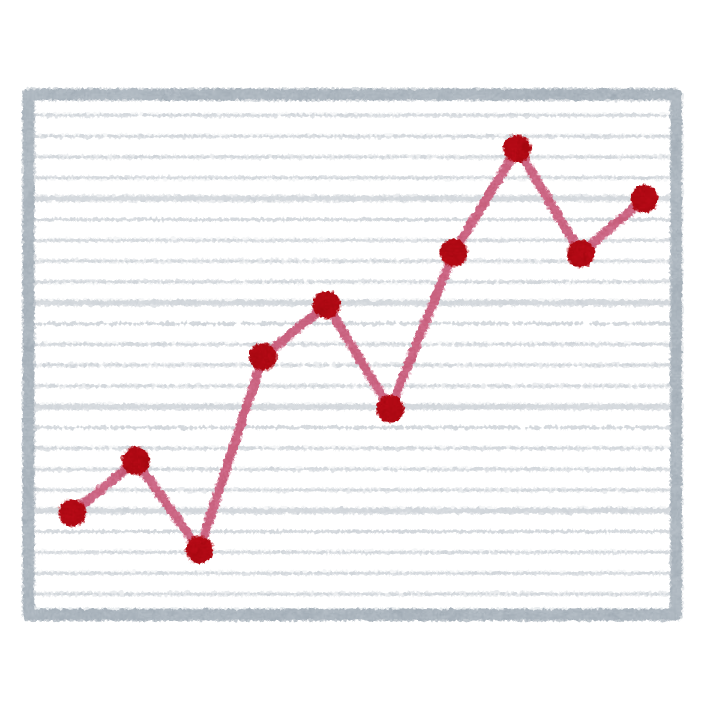
And if you feel like you're in a slump at the moment, there are two approaches.
One is to trust that - as long as you're working hard at it - if you keep plugging away, you'll suddenly notice you've jumped up a level without even realising. You're working hard? You got this.
The other approach is to change something. Make a concrete goal. Start something new. Find a new friend to talk to or a classmate to message in Japanese. Talk to the man who owns the noodle shop about Kansai dialect. Write five things you did each day in Japanese. Take the test. Apply for the job. がんばる (gambaru; “try your best”).
Originally posted February 2017
Updated 7th April 2020

Three Favourite Japanese Jokes
The worst job interview I ever had started with the interviewer asking me to tell him a joke.
I sat there flustered for a while before mumbling something about a man walking into a bar. The interviewer rolled his eyes.
I didn't get the job.
Sitting in a smokey cafe after the interview I remembered The Michael Jackson Joke which is probably the best beginner-Japanese joke of all time. I should've told him that one! Although he probably would have rolled his eyes at that too...
The worst job interview I ever had started with the interviewer asking me to tell him a joke.
I sat there flustered for a while before mumbling something about a man walking into a bar. The interviewer rolled his eyes.
I didn't get the job.
Sitting in a smokey cafe after the interview I remembered The Michael Jackson Joke which is probably the best beginner-Japanese joke of all time. I should've told him that one! Although he probably would have rolled his eyes at that too...
They say explaining a joke is like dissecting a frog - you understand it better but the frog dies in the process. So with that in mind, here are my three favourite, brilliant, terrible Japanese jokes.
The Michael Jackson Joke
「マイケルジャクソンの好きな色は何ですか。」
「青」
Maikeru Jakkuson no sukina iro wa nan desu ka.
Ao!
"What's Michael Jackson's favourite colour?"
"Blue."
You have to really commit to the punchline for this one. You can even tell the question in English and the punchline in Japanese, as long as the person you're speaking to knows the Japanese word ao.
I once told The Michael Jackson Joke to a friend while standing at a traffic light in Nagoya and a stranger in front of us burst out laughing. True story.
↓ (Skip to 1:05)
2. The Hawaiian Dentist Joke
「どうしてハワイ人は歯医者に行かないの? 」
「歯はいいから!」
Doushite Hawaii jin wa haisha ni ikanai no?
Ha wa ii kara.
"Why don't Hawaiians go to the dentist?"
"Because their teeth (=ha) are good (=ii)"
My friend Kendal sent me this one last week. ありがとうケンダル!
3. The Panda Joke
パンダの好きな餌は?
パンだ。
Panda no sukina esa wa?
Pan da.
"What's a panda's favourite food?"
"Bread (=pan)"
Pandas and puns are probably two of my favourite things. This joke has both.
What's your favourite Japanese joke? Have you ever told a joke in a job interview? Let me know in the comments!
First published 10 Feb 2017
Updated 31 March 2020
Watching Japanese TV Every Day for a Month (Or, What to Do When Things Don't Go To Plan)
In my second year of university, when I should have been revising for my Japanese exam, I borrowed the Studio Ghibli film Princess Mononoke (もののけ姫 Mononoke-hime) from a friend and watched that instead.
It was way too fast for me, and I didn’t understand anything. I think I literally caught about two words. It definitely didn’t help with my exam. If anything it just left me feeling a bit discouraged.
I should have watched Mononoke with subtitles. Or, probably, I should have watched something easier.
I gave up on watching Japanese films for a while after that. But later on, I discovered Japanese TV, and found it a fun and interesting way to develop my listening skills. As one of my monthly challenges this year, I decided to watch Japanese TV every day for a month.
I thought this would be easy – I already watch quite a lot of Japanese TV. But just like my exam “revision”, it didn’t exactly go to plan…

In my second year of university, when I should have been revising for my Japanese exam, I borrowed the Studio Ghibli film Princess Mononoke (もののけ姫 Mononoke-hime) from a friend and watched that instead. It was way too fast for me, and I didn’t understand anything. I think I literally caught about two words.
It definitely didn’t help with my exam. If anything it just left me feeling a bit discouraged. I should have watched Mononoke with subtitles. Or, probably, I should have watched something easier.
I gave up on watching Japanese films for a while after that. But later on, I discovered Japanese TV, and found it a fun and interesting way to develop my listening skills.
As one of my monthly challenges this year, I decided to watch Japanese TV every day for a month. I thought this would be easy – I already watch quite a lot of Japanese TV.
But just like my exam “revision”, it didn’t exactly go to plan…
Week One – A Promising Start
I spent the first week of September helping my brother move house. I had the week off work, I wasn’t doing any lesson prep or teaching, and I had good chunks of time to myself each day. It was easy to watch an episode or two of Japanese TV every day.
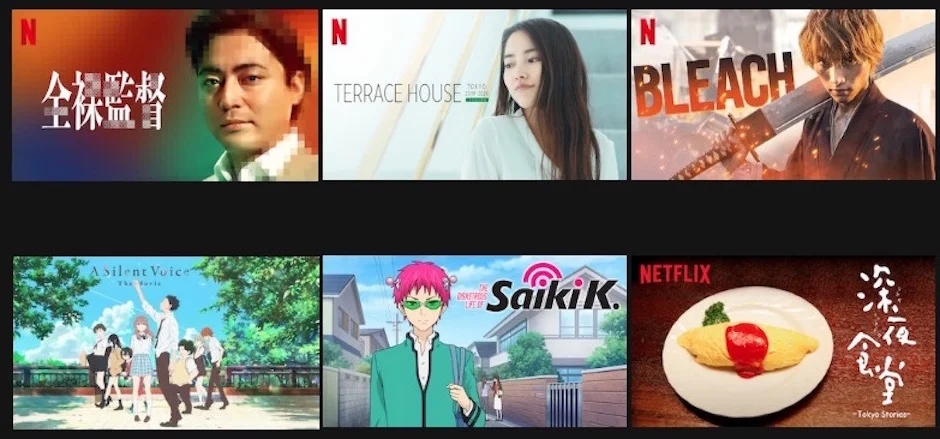
I watched The Naked Director (全裸監督 zenra kantoku), a Netflix series about the life of Japanese adult video director Toru Muranishi. These episodes are 45 minutes, so I’d watch one a day, or half an episode a day if I was short on time.
Tip: Don’t feel obliged to watch whole episodes. Half an episode is better than nothing.
Watching Japanese TV every day was going to be easy, I thought.
Week Two – Branching Out
Back home in Brighton, the following week, I watched some of Atelier (アンダーウェア andāwea, meaning Underwear), another drama series. Atelier is about a young woman, Tokita-san, who works for a high-class lingerie shop in Tokyo’s Ginza district. It’s a gentle, chocolate-boxy show about Tokita’s relationship with her intimidating boss.
I started watching Atelier when it came out in 2015, got bored and came back it this month. I watched about six episodes again this time, and then got bored again.
One of the great things about Netflix, of course, is that it has a wide range of shows, so you can jump about and find something you like. You don’t have to commit to watching in the same way that you would if you were buying a TV series or paying to rent it from a DVD shop (remember those? I do.)
Tip: If you get bored, stop watching and try something else!
I moved on to Netflix’s Terrace House (テラスハウス, terasu hausu).
(Interestingly, テラス (terasu) is the Japanese word for a balcony, so the “terrace house” of the title is a fancy modern house with a balcony, not a UK “terraced house”, which is a house built as part of a row of houses.)
Terrace House is a housemate-format reality TV show. Unlike other house-based shows, though, it’s slow-moving and meditative. There are no “evil” tasks or conflict-inducing rule changes.
The housemates are allowed to come and go as they please. They go to work. Not much really happens. No one is voted out, and mostly they seem to sit around talking about what to have for dinner.
It’s delightful, and from my students I know it’s pretty popular among learners of Japanese.
The format of Terrace House is great for comprehension, too. You watch the intro, which previews the action and shows you what’s going to happen. Then the action happens. Then the studio cast discuss what’s happened. Then we preview what’s coming up on the next episode. This is great for comprehension, because key points are repeated.
It’s a bit like this sketch:
Of course, reality TV is great listening practice for natural speech. It’s how real people speak, in fairly real situations. If you find natural speech fast or difficult to follow, try watching with subtitles.
Tip: turn the subtitles on. It’s not cheating to watch with subtitles! If you’re at intermediate level or above, try watching with Japanese subtitles.
I also watched a beautiful film, 聲の形 (koe no katachi, A Silent Voice), which was recommended to me by several of my students. It’s an animated teen drama, following the relationship between a deaf girl and a hearing boy, and exploring themes of bullying, disability and redemption.
If you liked Makoto Shinkai’s Your Name (君の名は, kimi no na wa), you should definitely watch A Silent Voice:
Things were going well!
Week Three – Forgetting
I went vegetarian when I was ten. A few months later, my friend’s sister decided she was going to be vegetarian too. But then the next week, out for a meal, she forgot and ordered spaghetti bolognese. Once her meal came, she remembered that she was supposed to be vegetarian and was quite upset.
I found this totally baffling. How could she forget something so important? How could someone forget that spaghetti bolognese isn’t vegetarian? Why didn’t her parents question it when she ordered? None of this made sense to me.
I was similarly surprised, in the middle of the third week of September, to remember that I was supposed to be watching Japanese TV every day. I hadn’t watched any Japanese TV for four whole days. Not only that, I even hadn’t noticed I hadn’t done it. I just completely forgot.
I’m usually a pretty organised and disciplined person, so this was an unpleasant surprise. September is a busy month for me, as my new courses start, and this year was particularly busy, as I had other things going on too.
But what to do now?
When you realise you’ve “failed” at a challenge you've set yourself, you basically have two choices.
Option one is to give up. There was no way for me to turn back time and achieve what I set out to do – to watch Japanese TV every day in September. So, I figured, I could just quit, and take it easy for the rest of the month.
Option one was pretty tempting, especially when I started to think about why I had managed to forget that I was supposed to be doing this challenge.
I think the key problem was that watching Japanese TV is not really a challenge for me. I don’t mean that it’s not difficult – obviously I don’t understand everything. Or that I have nothing to learn – I do.
But I already watch TV most days, and I watch quite a bit of Japanese-language TV, so watching Japanese TV every day was not enough of a change in habit. I did it for half the month, and then I forgot I was supposed to be doing it.
The other monthly challenges I’ve done have been harder, and yet I managed them. Speaking Japanese without being in Japan required planning, effort, early mornings and occasional bribery. Reading Japanese books every day, I needed to have a book on me at all times. Even playing Japanese video games every day required me to work out when I was going to squeeze 20 or 30 minutes out of each day.
But watching Japanese TV when I get home from work just feels a bit too similar to watching English-language TV when I get home from work.
Tip: don’t make your goals too easy, or you may find that they’re not motivating.
Option Two was to keep going, and see how it went. I figured that even if I didn't clock up the hours I was hoping for, it would probably still be more Japanese TV than I would have watched otherwise.
I decided to keep going.
Week Four - Taking a Detour
At the weekend, I watched five episodes of Terrace House (2.5 on Saturday, 2.5 on Sunday. See, the half episodes do add up).
I also watched another Japanese film, Tokyo Sonata:
Japanese TV started to crop up everywhere. A colleague asked if I was into Kore-eda films. The new term started, and I overheard my new beginner students talking about Terrace House. My STEP 2 students swapped recommendations for easy Japanese shows to watch. I went for a walk with a friend, and she told me she’d been exploring the Japanese side of Netflix.
As for me? I might watch Princess Mononoke again some day, now that I can understand it.
It’s good to make a plan for your language learning, but it’s ok if the plan doesn’t work out. Taking a detour can be more interesting anyway.













Like many people in the UK, I studied French in school. I liked French. I thought it was really fun to speak another language, to talk with people, and to try and listen to what was going on in a new country. (Still do!)
When I was 14 we went on a school exchange to the city of Reims, in northeastern France. I was paired with a boy, which I’m sure some 14-year-olds would find very exciting but which I found unbearably awkward. He was very sweet and we completely ignored each other.
That was nearly 20 years ago, and I didn’t learn or use any more French until, at some point in lockdown, I decided on a whim to take some one-to-one lessons with online teachers. Here are some things I learned about French, about language learning, and about myself.